


William Barnes and the Founding of Dorset County Museum and Library
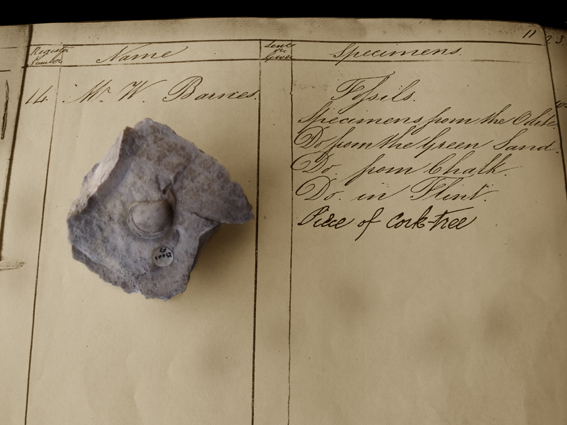
Fossil bivalve, presented to the museum by William Barnes in 1886. One of the earliest specimens collected for the newly established museum, it was gathered by Barnes’s school pupils while exploring cuttings exposed during the construction of the railway. Image courtesy of The Dorset History Centre/Dorset Museum & Art Gallery
Among the collections of Dorset County Museum and Library is a fossil bivalve presented to the museum by William Barnes in 1886. Modest in appearance, this specimen connects the institution with its earliest years, when Barnes, the celebrated Dorset poet, philologist, schoolmaster and antiquarian, encouraged his pupils to explore newly excavated railway cuttings around Dorchester in search of fossils.
The specimen represents more than a geological curiosity. It evokes a period when scientific discovery, archaeological investigation and growing concern for the preservation of Dorset's heritage converged, helping inspire the creation of a permanent county museum. It also reflects Barnes's distinctive approach to education, in which direct observation, practical investigation and intellectual curiosity were inseparable from classroom learning.
William Barnes (1801–1886) was a man of remarkable intellectual range. Best known for his poetry and scholarship on the Dorset dialect, he was also deeply interested in geology, natural history and archaeology. His curiosity extended from the fossils preserved in Dorset's rocks to the ancient monuments scattered across its landscape. Through his teaching, collecting and antiquarian research, he helped lay the foundations of an institution dedicated to preserving the county's natural and cultural heritage.
The account of Barnes's educational career provided by Trevor W. Hearl in 'William Barnes 1801–1886: The Schoolmaster' offers an important perspective on these achievements. Barnes's contribution to the museum was not simply that of a collector or antiquarian. His experience as a schoolmaster shaped his response to the opportunities and dangers presented by railway construction, inspiring both a campaign to protect ancient monuments and an educational project that brought scientific discovery within the reach of his pupils.
His contribution was part of a wider collaborative effort. He worked alongside fellow antiquarians, particularly his friend Charles Warne (1802–1887), whose studies of prehistoric and ancient monuments helped advance understanding of Dorset's archaeological significance. Together with the Reverend C. W. Bingham and other local enthusiasts, Barnes sought not only to collect and study evidence of the past but also to protect the historic sites in which that evidence survived.
The fossil bivalve presented by Barnes in 1886 offers a tangible connection to these early endeavours. It links the museum's collections with the enthusiasm of young fossil hunters, the scholarly networks of Victorian naturalists and the determination of those who believed Dorset's heritage should be preserved for future generations.
The story of Dorset County Museum and Library is therefore inseparable from that of William Barnes: a poet who helped establish a museum, a teacher who encouraged scientific discovery, and an antiquarian who championed the preservation of Dorset's historic landscape.
William Barnes: poet, schoolmaster, naturalist and antiquarian
William Barnes occupies a special place in Dorset's cultural history. His poetry celebrated the county's people, landscape and traditions, while his scholarly work on the Dorset dialect sought to preserve the distinctive language of rural communities during a period of considerable social and economic change.
Yet Barnes's interests extended well beyond literature. He possessed a deep curiosity about the natural world and the history of the landscape around him. Geology, fossils, archaeology and antiquities all attracted his attention, and his work as a schoolmaster gave him an opportunity to share these interests with his pupils.
As Hearl's account of Barnes's teaching suggests, the practical application of knowledge was central to his educational outlook. For Barnes, learning was not confined to memorising words or absorbing information from books. It involved observation, investigation and the direct examination of the world around him.
The landscape itself could serve as a classroom. Fossils revealed traces of ancient life; geological strata provided evidence of the processes that had shaped the earth; and archaeological remains offered clues to earlier inhabitants and their activities. By encouraging his pupils to investigate these subjects for themselves, Barnes made the surrounding countryside an extension of the schoolroom.
This approach reflected a wider nineteenth-century interest in natural history and antiquarian research. Local museums, learned societies and private collectors were playing an increasingly important role in documenting the natural and historical world. At the same time, industrial development was transforming the landscape, exposing new discoveries while threatening to destroy archaeological remains.
Barnes recognised both the opportunities and the dangers. His collecting activities helped preserve objects that might otherwise have been lost, while his archaeological interests led him to advocate for the protection of important historic sites.
These aspects of his work were closely connected. Whether collecting fossils with his pupils, corresponding with geological experts or working alongside Charles Warne to protect ancient monuments, Barnes sought to deepen understanding of Dorset's past and ensure that its evidence survived.
Railway Mania and the threat to Dorchester's ancient monuments
The origins of Dorset County Museum and Library were closely connected with the expansion of the railway network during the 1840s. The period known as Railway Mania brought ambitious proposals for new lines across the country, creating opportunities for transport and commerce but also raising concerns about the destruction of archaeological sites.
In the autumn of 1845, plans for two rival railway schemes affecting Dorchester revealed a particularly serious threat. One proposed route, described as the Corkscrew line from Southampton, and a competing broad-gauge scheme from Yeovil appeared likely to damage two of the area's most important ancient monuments.
Poundbury Camp, the substantial ancient earthwork overlooking Dorchester, was threatened by a railway cutting. Maumbury Rings, the town's impressive prehistoric earthwork later adapted for Roman use, faced the prospect of being demolished to make way for a station.
Although Barnes was, perhaps surprisingly, a keen supporter of railway development, he immediately recognised the importance of protecting these sites. His response demonstrates that support for technological progress did not prevent him from opposing particular developments when they threatened irreplaceable historical evidence. Barnes helped organise a protest committee with the Reverend C. W. Bingham and Charles Warne. Together, they brought the archaeological significance of the monuments to wider attention and sought to influence the railway proposals.
In correspondence with his friend William Colfox of Bridport, Barnes described the campaign:
"Two friends of mine (Bingham and Warne), with myself, first agitated the Archaeological Association in behalf of the Amphitheatre, which I am so happy to find will be saved; and when we found Poundbury likely to be cut, we prepared a petition to Parliament..."
Barnes also expressed the hope that the threatened earthwork could be preserved by tunnelling beneath it.
The correspondence reveals the practical nature of his involvement. He did not merely express concern about the possible loss of ancient monuments; he helped organise collective action, prepare a parliamentary petition and enlist the support of others who shared his interest in preserving Dorset's past. The campaign also illustrates the relationship between Barnes's antiquarian interests and his wider educational outlook. Ancient monuments, like fossils and geological formations, provided evidence that could deepen understanding of the past. Their destruction would mean the loss of information that could not easily be recovered. The immediate threats to Maumbury Rings and Poundbury helped stimulate a broader proposal: if railway construction was likely to expose important geological and archaeological discoveries, Dorchester needed an institution capable of collecting, studying and preserving them.
The foundation of Dorset County Museum and Library in 1845
With the immediate campaign to protect the monuments under way, Barnes and his fellow antiquarians turned to the wider implications of railway construction.
Hearl records that the committee recognised the opportunity presented by the disturbance of the countryside. Railway cuttings could reveal specimens of interest in natural history and bring British and Roman antiquities to light. Without organised collecting and preservation, such discoveries might be lost, dispersed or damaged.
The committee therefore proposed the establishment of a museum and library for the county. On 15 October 1845, a preliminary meeting was held to consider the creation of the institution. The meeting adopted a resolution stating:
"It is advisable to take immediate steps for the establishment of an institution in this town containing a museum and library for the county of Dorset."
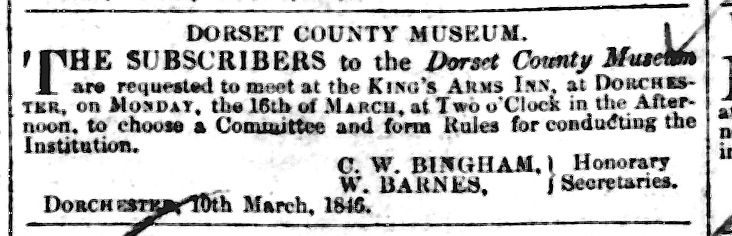
Barnes and the Reverend C. W. Bingham were appointed honorary secretaries. Lord Ashley was invited to serve as president, while Herbert Williams became treasurer. A subscription list was opened to finance the undertaking. Barnes himself contributed £1, and supporters were approached by letter to explain the proposed institution's purpose and encourage donations.
In these appeals, Barnes emphasised the importance of collecting and arranging objects systematically. Specimens that might otherwise be overlooked or lost could acquire greater value when brought together in a permanent collection, where they could be examined, compared and studied.
The proposed library was equally important. Barnes envisaged it as the nucleus of a wider scientific and theological library for Dorset, addressing what he regarded as a significant need in the county.
His ambition was to make the institution useful and accessible to the public. The museum would preserve physical evidence of the county's natural and human history, while the library would provide resources for scholarship and further investigation. The project thus embodied two closely related principles that ran throughout Barnes's work: the preservation of knowledge and the promotion of education.
The museum was not intended simply as a repository for curiosities. It was conceived as an institution in which specimens and antiquities could be systematically arranged, knowledge exchanged and the public encouraged to develop an interest in the county's heritage.
Barnes's appointment as honorary secretary reflected the practical contribution he was already making through his collecting activities, teaching and enthusiasm for the study of Dorset's natural and archaeological history.
The foundation was a collective achievement, depending on the commitment of local scholars, collectors, clergymen and benefactors. Nevertheless, Barnes's energy and educational interests helped bring these different strands together.
The early museum: collections, books and public education
Following its establishment, the museum began to assemble a collection reflecting the natural history and antiquities of Dorset.
During 1846, rooms were rented from the family of Dufall, one of Barnes's pupils, in a fine half-timbered house in High West Street, Dorchester, subsequently known as Judge Jeffreys' house. The building provided accommodation for the growing collection of books and specimens and became an important cultural centre for the town.
The collections developed through donations and the efforts of local collectors. Fossils, geological specimens, antiquities and natural history objects were brought together, gradually establishing the museum's character as a centre for the study of the county's natural and human past.
Among the contributors were Charles Hall of Osmington House and Charles Warne, who supplied British and Saxon antiquities from their respective collections. The Reverend J. C. Dale of Glanville's Wootton contributed butterflies and other natural history specimens, while collectors from the Isle of Purbeck supplied important fossils, including an ichthyosaur and part of a plesiosaur.
The range of these contributions reflected the founders' broad ambitions. The museum would encompass more than archaeology or geology alone. Its collections would bring together evidence from the county's landscape, wildlife and successive periods of human occupation.
Barnes's own educational work contributed directly to this development. His pupils collected fossils and geological specimens from the railway excavations, and the school's collection became an important source of material for the emerging institution.
Although the early acquisition records do not always identify individual donors or specimens precisely, they include references to fossils from the Oolite, Greensand and Chalk, as well as specimens preserved in flint. These entries reflect the geological variety represented in the collections and the contribution made by local collecting.
The early museum consequently grew from a combination of formal donations, private collections and the practical investigations encouraged by Barnes in his school.
The railway cuttings and Barnes's young fossil hunters
The railway excavations provided Barnes with an exceptional opportunity to develop his teaching methods beyond the classroom.
As the construction works advanced towards Dorchester from the north and east, the newly exposed geological strata revealed fossils and rock specimens that had previously been inaccessible. When work was temporarily abandoned following the collapse of the railway boom, the excavations remained available for investigation.
Barnes took advantage of these circumstances. His pupils at Norman's House were increasingly likely to leave their classroom and venture into the railway cuttings with bags and hammers, searching for fossils and geological specimens.
Lucy Baxter, Barnes's daughter, writing under the name Leader Scott in her 1887 biography, 'The Life of William Barnes, Poet and Philologist', recalled these expeditions with evident affection:
"It was amusing to see the dignified way in which these young savants started, with bag and hammer, and the undignified return, covered with chalk soil and showing very juvenile excitement over their terebratulæ, echini, and belemnites."
The passage brings the young fossil hunters vividly to life. Setting out with the seriousness of budding scientists, they returned covered in chalk, delighted by their discoveries. These were not merely recreational outings. They formed part of Barnes's distinctive approach to education, combining practical investigation with the academic study of natural history.
His pupils learned by observing the exposed strata, collecting specimens and examining the evidence themselves. Rather than relying exclusively on descriptions in books, they could encounter geological formations directly and develop an understanding of the natural world through their own efforts. The school collection soon became a fine one, and Barnes encouraged the boys to establish private collections of their own. His purpose extended beyond the immediate acquisition of specimens: he hoped to stimulate interests that would continue throughout their lives.
One pupil in particular illustrates the lasting possibilities of this approach. The Reverend Octavius Pickard-Cambridge became one of Dorset's leading nineteenth-century naturalists. His subsequent achievements provide an example of how the encouragement of scientific curiosity during school years could contribute to a lifetime of investigation.
Barnes's teaching also connected local discoveries with the wider scientific community. When his own knowledge was insufficient to identify a specimen, he sought assistance from specialists. His pupils were therefore introduced not only to practical collecting but also to the processes of scientific correspondence and expert identification.
Baxter recorded that Barnes sometimes had to appeal to higher authorities when the demands of geological classification exceeded the knowledge available locally. Correspondence with specialists associated with the Geological Society in London helped identify unfamiliar specimens and demonstrated that some discoveries were genuine rarities.
In October 1846, Professor Ansted offered assistance with geological specimens, explaining:
"Nothing can give me greater satisfaction than to be able to assist any one labouring in the field of geology."
Ansted invited Barnes to send specimens to him at the Geological Society of London, at Somerset House, where he would examine them or seek advice from other experts.
Other discoveries attracted attention as well. J. E. Jones of the Geological Society reported that fossils sent from Dorchester by Barnes proved to be an interesting group of chalk brachiopods. Casts of shells preserved in flint also attracted geological interest.
These exchanges demonstrate that Barnes's work formed part of a wider scientific network. Discoveries made by a local schoolmaster and his pupils could be examined by specialists in London, connecting practical classroom investigations with the developing body of geological knowledge.
The pupils' surplus specimens also contributed to the museum's early collections. Although individual contributions cannot always be traced, the acquisition records preserve evidence of the kinds of geological material being assembled.
This connection between teaching and collecting was fundamental to the museum's origins. Barnes's school became a place where scientific interests were cultivated, specimens accumulated and knowledge shared. The museum provided the means of preserving and extending those activities beyond the classroom.
Charles Warne, William Barnes and the preservation of Dorset's past
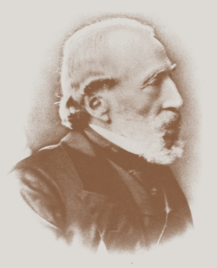
Barnes's contribution to Dorset's heritage extended beyond collecting and education. He was also an active antiquarian who recognised the importance of protecting the archaeological sites from which historical knowledge was derived.
An important figure in this work was his friend Charles Warne (1802–1887), a Dorset-born antiquarian and archaeologist who specialised in the prehistoric and ancient monuments of the county. Warne's interests complemented those of Barnes. Both men were fascinated by the evidence of earlier communities preserved in the landscape, and both recognised that archaeological knowledge depended on the survival of the sites and objects through which the past could be investigated.
Their collaboration was particularly important during the railway disputes of 1845. Together with Bingham and other interested individuals, they helped organise opposition to proposals that threatened Maumbury Rings and Poundbury Camp.
Barnes's letter to William Colfox shows how the campaign developed from concern about individual monuments into organised action. The petition to Parliament and the proposal to tunnel beneath Poundbury reflected the campaigners' determination to find a means of accommodating railway development without sacrificing an important archaeological site.
Barnes also acknowledged the limited resources available to the newly established museum. Supported by subscriptions and donations, it lacked the financial influence of the railway company. Nevertheless, its founders used correspondence, public representations and appeals to those responsible for railway construction to draw attention to the significance of the threatened monuments. Charles Warne also appealed to Isambard Kingdom Brunel in an effort to influence the proposed route.
The campaign has been regarded as an important early episode in British heritage conservation, illustrating how local knowledge and organised public advocacy could bring archaeological concerns into discussions about major infrastructure projects.
The precise legal and engineering arrangements surrounding the protection of each site require confirmation from contemporary records. Nevertheless, the wider significance of the campaign is clear: Barnes, Warne, Bingham and their fellow antiquarians helped advance the principle that ancient monuments deserved serious consideration when development threatened their survival.
Their actions also demonstrate the close relationship between the museum's foundation and the preservation of the landscape. Collecting fossils and antiquities was one way to safeguard the past, but protecting ancient earthworks and monuments in their original settings was equally important.
A museum could preserve an object removed from the ground; it could not fully replace the historical evidence contained within a destroyed archaeological site.
The museum's changing fortunes and permanent home
The early museum occupied an important place in Dorchester’s cultural life, providing a home for collections that might otherwise have remained dispersed among private collectors and enthusiasts. Its premises in High West Street accommodated a growing collection of books and specimens, offering a setting in which the town’s natural history and antiquities could be preserved, studied and explored.
Barnes’s departure from Dorchester in 1862 marked a significant change in the institution’s circumstances. According to Hearl’s account, the museum and library subsequently declined and relocated to No. 3 Trinity Street (now Moule's House), to rooms behind the Antelope Hotel. The building, described as an old house in a back street, provided a temporary home for the collections during a period of considerable uncertainty.
Despite these difficulties, the museum retained its educational and cultural significance. Its collections were famously evoked by Thomas Hardy in his novel The Mayor of Casterbridge, in which he described the museum as:
‘It is an old house in a back street- I forget where- but you’ll find out- and there are crowds of interesting things- skeletons, teeth, old pots and pans, ancient boots and shoes, birds’ eggs- all charmingly instructive. You’ll be sure to stay till you get quite hungry.’
Hardy’s description captures the miscellaneous character of the museum’s collections, bringing together natural history specimens, antiquities and everyday domestic objects. His reference to the museum as a place of instruction also reflects its wider educational purpose and its role in making objects of historical and scientific interest accessible to the public. The passage provides a valuable literary impression of the institution during its earlier years, preserving a sense of the fascination its collections held for visitors.
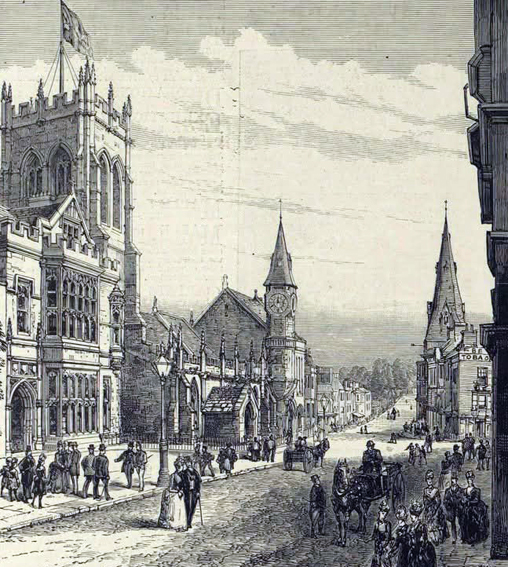
The museum’s eventual establishment in a purpose-built building represented the fulfilment of an ambition first expressed in 1845. The new premises on High West Street opened in the early 1880s, providing more suitable accommodation for the expanding collections and establishing a permanent home for the institution. This development marked a decisive stage in the museum’s evolution from a modest local initiative into an established county institution.
The new building reflected the continued support of local benefactors and the contributions of successive generations of scholars, collectors and museum supporters. It also demonstrated the enduring relevance of the founders’ original aims: to preserve Dorset’s natural history and antiquities while providing a library and resources to support further study.
Barnes did not live to witness the museum’s later development. He died in October 1886, but his association with the institution remained central to its history. The museum’s progression from its early premises in High West Street to its temporary home at No. 3 Trinity Street, and ultimately to a purpose-built museum, illustrates both the challenges of sustaining a local cultural institution and the lasting importance of the vision upon which it was founded.
A shared educational and cultural legacy
The founding of Dorset County Museum and Library was a collective achievement, shaped by the dedication of local scholars, collectors and benefactors. William Barnes's contribution was distinctive because it brought together teaching, scientific enquiry, archaeological preservation and a deep appreciation of Dorset's landscape.
Hearl's account of Barnes as a schoolmaster helps explain why the museum's educational purpose was so closely connected with its origins. Barnes encouraged his pupils to investigate the natural world directly, but he also understood the importance of preserving the results of their investigations and making knowledge available to others.
His teaching fostered habits of observation, practical inquiry and sustained interest. The railway cuttings became an outdoor classroom; the boys' collections provided material for study; correspondence with specialists connected their discoveries to wider scientific research; and the museum offered a permanent home for specimens that might otherwise have been lost.
The relationship between Barnes and his pupils therefore extended beyond the immediate requirements of school education. He sought to cultivate interests that could develop throughout their lives, as the later career of Octavius Pickard-Cambridge illustrates. His work alongside Charles Warne and the Reverend C. W. Bingham demonstrated a complementary principle: the preservation of knowledge required both the collection of objects and the protection of the sites in which historical evidence survived.
These activities helped establish a lasting connection between education, scientific collecting and heritage conservation in Dorset.
William Barnes's enduring legacy
The fossil bivalve presented by Barnes to the museum in 1886 offers a fitting reminder of his contribution. As an individual object, it connects the institution's collections with the curiosity and enthusiasm that helped shape its beginnings.
Behind such specimens lies a wider story of educational innovation and civic commitment. In 1845, Barnes and his colleagues responded to the threats posed by railway construction by helping to organise a campaign for the protection of ancient monuments. They also recognised that the excavations could reveal valuable geological and archaeological material that needed to be collected and preserved.
The resulting museum and library brought these ambitions together. It provided a home for fossils, antiquities and natural history specimens while establishing a resource for scientific, historical and literary study. Barnes's educational philosophy gave this work an additional dimension. His pupils were encouraged to learn from their own observations and efforts, developing an understanding of the natural world through direct experience. Their discoveries contributed to the early museum, while the institution itself embodied the wider principle that knowledge should be preserved, organised and made accessible.
Barnes died in October 1886, but the work to which he had devoted so much energy continued. Dorset County Museum and Library developed into a lasting institution dedicated to the study of the county's natural history, archaeology and cultural heritage.
Today, Dorset Museum and Art Gallery continues to preserve and interpret collections that illuminate Dorset's geological, archaeological, social and cultural history. Its work reflects the continuing importance of collecting, research, conservation and public education. The principles that guided Barnes remain relevant. Discoveries must be carefully documented, objects require long-term care, archaeological sites need protection, and education benefits when people are encouraged to investigate evidence for themselves.
Barnes's story reminds us that the value of a museum lies in more than the collections it houses. It also lies in the curiosity, knowledge and sense of responsibility that bring those collections to life. For Barnes, understanding Dorset meant looking closely at its landscape, learning from its evidence and recognising what could be lost without care. His work as a schoolmaster, naturalist and antiquarian helped transform those convictions into a lasting public institution.
That spirit of enquiry and stewardship remains an important part of the museum's heritage, linking the discoveries of nineteenth-century collectors with the continuing study and appreciation of Dorset's past.
14:30 till 15:30
Inspired by Barnes
14:30 till 15:30
Keepen Up O' Chris'mas
Starts 09:00
ONLINE | Barnes Night: A Celebration of the Life and Work of William Barnes
Starts 09:00
ONLINE | A Dorset Spring through the Poetry of William Barnes